
Refresh vs. Rebrand: Small Biz Branding Made Simple
What’s The Next Step For Your Small Business? A Brand Refresh Or Full Rebrand? Let’s Talk!

You’ve Outgrown Your Canva Logo… Now What?
You’ve outgrown your Canva logo — and you can feel it.
Your brand technically exists, but something feels off. Creating content takes longer than it should. You’re constantly second-guessing fonts, colors, and layouts. And deep down, you know your business has grown… but your branding hasn’t caught up.
This is one of the most common reasons clients come to me asking about a brand refresh vs rebrand. In fact, many of them start by requesting pricing for just a logo, only to realize what they’re actually craving is clarity, consistency, and a brand that truly supports the caliber of business they’re running.
One of my favorite examples of this is my longtime client Camino & Company. Early on, we were working with the Canva logo she originally started her business with. While it technically worked, it wasn’t functional. We didn’t have a fully fleshed-out brand suite, which meant we were constantly changing fonts and colors just to make things work. Content creation felt inefficient, marketing took longer than it should have, and there was no clear, recognizable visual identity guiding her brand.
When we finally moved forward with a full rebrand, everything changed. She walked away with a complete logo suite, an intentional color palette, a defined typography system, and a cohesive visual direction that shaped every part of her marketing moving forward. Suddenly, her brand felt aligned with where her business was actually at…elevated, confident, and recognizable. We weren’t reinventing the wheel every time we designed something, and her brand storytelling became clearer, stronger, and far more effective.
On the flip side, I’ve also worked with clients who didn’t need a total reset. Sometimes, there are pieces that are working and that’s where a brand refresh makes more sense. Expanding an existing color palette, creating additional logo variations for versatility, or adding supporting visual assets like patterns, backgrounds, or illustrated icons can completely transform how functional and polished a brand feels, without starting from scratch. Those finishing touches are often what bring a brand to life.
Here’s the thing I always remind business owners: branding isn’t just about “looking pretty.” A custom, cohesive brand identity helps you connect with your target audience, confidently market your business, create a memorable online presence, increase sales through credibility, and stand out in a crowded market. A DIY Canva logo is usually a band-aid, not a long-term solution. Branding is an investment in the future and longevity of your business, and when you invest in it, everything from marketing to content creation becomes easier and more aligned.
Every business evolves, and branding should evolve too. The logo you started with wasn’t meant to carry you forever…and that’s okay. Think about how often you need something visual for your business. How different would it feel if you had intentional, on-brand designs ready to go instead of spending hours wondering if something “feels right” when you don’t even have a clear brand to reference?
In this post, I’m going to walk you through the real difference between a refresh brand approach and a full rebrand, help you identify which one your business actually needs, and give you practical guidance to make a confident, strategic decision—not one based on pressure or trends.
If you’ve been feeling unsure, overwhelmed, or stuck between the two, you’re in the right place.
Brand Refresh vs. Rebrand: What’s the Real Difference?
When it comes to brand refresh vs rebrand, the confusion usually comes from thinking branding is all-or-nothing. In reality, both options are part of a natural design evolution for growing small businesses, the key is knowing which one supports your current season and future goals.
A brand refresh is like giving your business a fresh coat of paint. You’re keeping what already works, the recognition, the foundation, the heart of your brand, but updating and expanding the visuals so they feel more aligned, more modern, and more functional. This might include refreshed colors, refined typography, updated logo variations, or new supporting assets that make your brand easier to use across marketing.
A rebrand, on the other hand, is a full transformation. This usually happens when a business has outgrown its original positioning entirely. A rebrand often includes a new logo suite, color palette, messaging, website, and visual direction and sometimes even a new name. It’s about rebuilding the foundation so your brand matches where your business is headed, not where it started.
Both paths are valid. Both are strategic. And both can be incredibly impactful when done with intention.
Real-Life Brand Refresh Examples


One refresh I love referencing is my work with The Women’s Dietitian. Instead of starting from scratch, we kept one of her original logos, a symbol her audience already recognized and trusted, and evolved it into something with more personality and depth. From there, we built out additional logo variations, refreshed her color palette and typography suite, and introduced updated visual assets like patterns, backgrounds, and hand-illustrated icons.
Those hand-illustrated icons became especially powerful. As a fierce advocate for women with PCOS, she uses visuals like a sign that reads “Women Deserve Better” to support her messaging and tell deeper stories on social media. The refresh gave her the branding tools she needed to confidently relaunch and market her PCOS programs and even carry that same brand through her book launch. It was a perfect example of a refresh brand approach: familiar, recognizable, but elevated and far more functional.
Another great example is the refresh I led for the Indiana Peony Festival. We intentionally kept their original logo exactly as it was, but built onto it with a more robust and versatile logo suite. One of the most impactful additions was a circular badge logo that’s now become one of their most recognizable and beloved brand elements. Its shape works seamlessly for signage, stickers, buttons, and digital spaces in ways the original logo simply couldn’t.
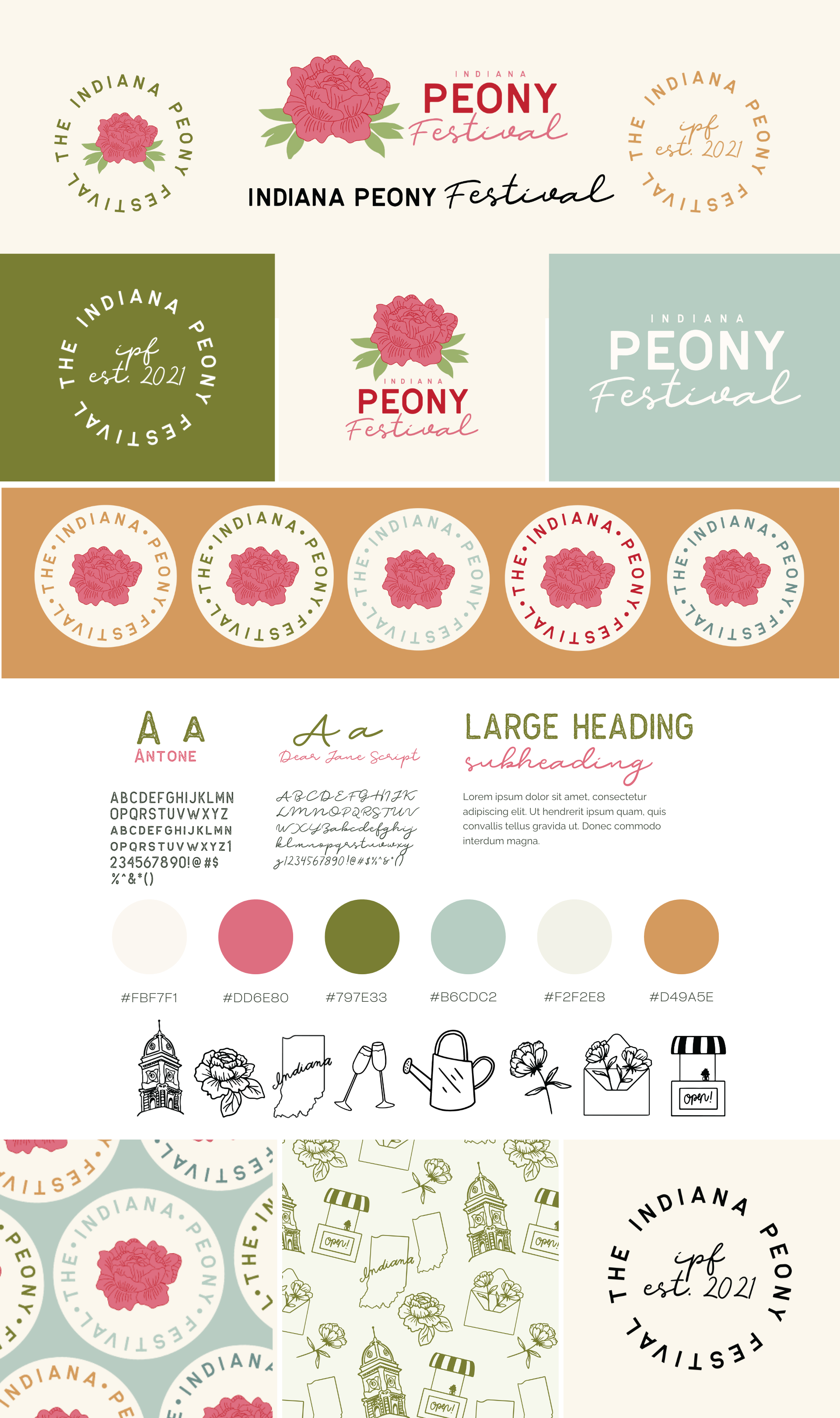
We also refined and expanded their color palette. Before, the festival had “go-to” colors, but they weren’t quite right and they weren’t consistent. By honing in on the exact shades and expanding the palette, we created a system that feels intentional and flexible. From there, the refresh became the foundation for sub-branding signature events like Brunch & Blooms and Peonies in the Park, complete with custom hand-illustrated icons for each experience. The result? A clear, recognizable visual identity that makes everything from website updates to signage design easier and more cohesive without ever losing what people already loved.
A Quick Way to Think About the Difference
If you’re deciding between a brand refresh vs rebrand, ask yourself this:
Are you building on something that’s already working or are you trying to correct something that no longer fits?
A refresh supports growth, clarity, and consistency without wiping the slate clean. A rebrand creates a brand new foundation for businesses that have truly outgrown their original identity. Both are powerful branding solutions for small businesses and both play an important role in long-term brand evolution.
How a Strong Brand Refresh or Rebrand Benefits Small Businesses
When people talk about brand refreshes or rebrands, they often point to big-name examples, and honestly, some of them are worth mentioning. Brands like Magnolia and Olipop are great examples of how intentional branding supports growth. Their visuals, messaging, and overall experience evolve alongside the brand, while still feeling recognizable and rooted in who they are.
But here’s the thing: those examples don’t translate perfectly to small businesses.
Big brands have massive marketing budgets, built-in audiences, and instant name recognition. They can afford to experiment, pivot, and test new visuals without losing trust. Small businesses don’t have that luxury, which is exactly why branding for small business matters even more.
As a small business owner, your brand is often the first impression someone has of you. You don’t get the benefit of a household name. Your visuals, messaging, and consistency have to do the heavy lifting. In crowded online spaces full of noise and competition, strong branding helps you cut through and instantly communicate legitimacy, clarity, and professionalism.
I also see branding play a huge role in credibility. A cohesive brand identity signals, “This isn’t a side gig, this is a real business.” It builds trust before you ever hop on a call, send a proposal, or make a sale. When your brand looks intentional, people feel more confident investing in you, booking you, and taking you seriously.
For small businesses especially, a strategic brand refresh or rebrand isn’t about chasing trends (trust me you don’t want to have to invest in this multiple times!), it’s about creating recognition, consistency, and confidence. It allows you to show up with clarity, market yourself more easily, and stop blending in with competitors who all look and sound the same.
Here’s how I often explain the difference in one simple sentence:
A brand refresh delivers faster results — improved visual consistency, less confusion, and easier recognition without starting over.
A rebrand creates long-term impact — deeper emotional connection, stronger positioning, and the ability to attract bigger opportunities and higher-level clients.
Both are powerful branding solutions for small business owners. The key is choosing the one that supports where your business is now AND where you want it to go next.
The Purpose Behind a Refresh or Rebrand
One of the biggest misconceptions I see around branding is that it’s just about making things “look pretty.” While beautiful visuals absolutely matter, the real purpose of a brand refresh or rebrand goes much deeper than aesthetics.
At its core, branding is about communication. It’s how you tell people who you are, what you do, who you serve, and why they should trust you, often before you ever get the chance to explain it yourself. Your brand is working for you every time someone lands on your website, scrolls past your content, or hears about you through word of mouth.
This is why I’m always careful to explain to clients that branding isn’t a one-off design project, it’s an investment in how your business shows up long-term. A strategic refresh or rebrand gives you the tools to market your business clearly and consistently, instead of reinventing the wheel every time you need a graphic, a post, or a new page on your site.
I’ve seen firsthand how powerful this can be. Clients often come into the process feeling scattered, unsure, or even a little embarrassed to share their website or materials. After a refresh or rebrand, that hesitation disappears. They show up more confidently online, speak more clearly about their offers, and feel aligned with the business they’re building. Marketing becomes easier, not because they’re doing more, but because everything finally feels connected.
Branding also plays a huge role in growth. Whether the goal is attracting better-fit clients, launching new offers, raising prices, or simply feeling more legitimate as a business owner, your brand sets the tone. When your visuals and messaging are aligned with where you’re headed, it’s easier for others to see your value and for you to step into it yourself.
What I wish every client understood from the beginning is this: a strong brand doesn’t just support where your business is today. It supports where you’re going. It gives you consistency, confidence, and clarity that compound over time. And whether you’re choosing a brand refresh or a full rebrand, the purpose is the same, to build a foundation that helps your business grow with intention, not guesswork.
Benefits of a Brand Refresh
A brand refresh is usually the right move when there’s already something working, but it just needs clarity, polish, or expansion to support the next season of business.
One of the first things I look at is brand recognition. Does the business already have an established presence? Is there a visual element — a logo, symbol, or overall look — that people already recognize and associate with the brand? If so, we want to be careful not to lose that familiarity. In the same way food brands might say “same great taste, new look,” some businesses benefit most from keeping what’s recognizable while evolving how it shows up.
A refresh is also ideal when a business has hired branding support before, but things have shifted slightly over time. Maybe the business has grown, refined its offers, or entered a new season, but not so dramatically that it requires starting over. In those cases, a refresh allows us to honor the foundation while updating the visuals to reflect where the business is now.
Here are a few common scenarios where I typically recommend a refresh instead of a full rebrand:
The audience and core mission are the same, but the visuals feel dated
There’s recognition around an existing logo or symbol we don’t want to lose
The brand feels inconsistent or limited, not wrong
The business needs more versatility — not a total reset
The website needs refinement and clarity, not a full rebuild
What a refresh often includes is strategic expansion. That might look like additional logo variations for different use cases, a refined and expanded color palette, an intentional typography suite, or supporting visual assets like patterns, backgrounds, and hand-illustrated icons. These elements make a brand more functional and easier to use across marketing, which is where most clients feel the biggest relief.
The benefits I see most often after a brand refresh include:
Visual polish: Updated colors, fonts, and imagery that feel modern and aligned
Consistency: A clear system that makes branding easier to apply across platforms
Clarity: Messaging and visuals that support one cohesive story
Efficiency: Faster content creation without constantly reinventing the wheel
Quick wins: A shorter timeline and lower investment than a full rebrand
Some business goals pair especially well with a refresh: think things like staying relevant, leveling up visuals, improving consistency, or strengthening recognition without confusing an existing audience.
Clients who are a great fit for a brand refresh often say things like:
“I don’t hate my brand… it just feels a little off.”
“I feel like we’re almost there, but something’s missing.”
“I want things to feel more cohesive and professional.”
“I love parts of my branding, I just don’t know how to use it well.”
A brand refresh is about building on what already exists and giving your brand the structure it needs to grow with confidence.
Benefits of a Rebrand
A full rebrand is usually the right move when the existing branding feels dated and is actively holding the business back.
One of the biggest red flags for me is when a client has never hired professional brand or web design support before. In many of those cases, the branding they have is purely visual — a “pretty” logo with no strategy behind it. There’s no clear positioning, no cohesive system, and no real foundation to build on. At that point, a refresh won’t fix the problem — we need to turn things upside down and rebuild intentionally from the ground up.
I also recommend a rebrand when a business has significantly outgrown its original identity. This often happens after a pivot, a major shift in audience, or a big evolution in offers. The brand no longer reflects who they serve, the caliber of work they do, or the direction they’re heading — and trying to patch that with small updates usually creates more confusion than clarity.
Clients who need a rebrand often come to me feeling frustrated, stuck, or disconnected from their brand. They say things like:
“I’m embarrassed to share my website or materials.”
“People don’t really understand what I do.”
“My brand doesn’t feel like me anymore.”
“I’ve grown so much, but my branding still feels like I’m playing small.”
These are strong indicators that the issue isn’t polish, it’s alignment.
A rebrand allows us to create stronger positioning, clearly communicate what the business does, and define who it’s for. It helps build a deeper emotional connection with the right audience and lays the groundwork for growth. I’ve seen rebrands give clients the confidence to raise prices, launch new services, pursue bigger opportunities, and finally feel proud of how their business shows up online.
One of the most important things I explain to clients who are nervous about the investment is that a rebrand isn’t just about today. It’s about long-term ROI. When your branding is rooted in strategy, you’re not constantly redoing things, second-guessing decisions, or duct-taping visuals together. You’re building a foundation that can support years of consistent, cohesive marketing.
The clients who benefit most from a rebrand are usually:
Pivoting their audience or offers
Launching a new service, program, or direction
Ready to scale or position themselves at a higher level
Outgrowing DIY branding that no longer reflects their expertise
A rebrand isn’t about starting over for the sake of change. It’s about creating a brand that helps you tell your story clearly, confidently, and strategically so your business can grow into what it’s meant to be.
Aligning Your Decision with Your Future Business Goals
When deciding between a brand refresh vs rebrand, it’s important to zoom out and think beyond what feels frustrating right now. This isn’t about fixing something just because it feels outdated or doing something because a marketing blog told you it was “time.” It’s about creating the brand that will actually take your business where you want to go next.
One of the biggest shifts I encourage clients to make is moving from a reactive mindset to a forward-thinking one. Your current challenges matter, but your future goals matter just as much. The branding decisions you make today should support not only where your business is, but where it’s headed in the next one, three, or even five years.
This is where clarity starts to form and where the decision between a refresh and a rebrand becomes much easier.
Step 1: Reflect on Your Future Goals
Before making any branding investment, I always encourage business owners to reflect on a few key questions.
Who do I want to serve 1–3 years from now?
If your audience is staying largely the same and you’re simply refining how you show up, a brand refresh often makes the most sense. You’re keeping familiarity while elevating perception. On the other hand, if you’re pivoting your audience, niching down, or shifting into a completely new space, that’s usually a strong indicator that a rebrand is the better path forward.
How do I want my business to feel to clients?
This is one of my favorite questions because it reveals so much. If you’re craving a cleaner, more modern, more cohesive version of what already exists, a refresh can deliver that. If you’re looking for a total personality shift — something that feels dramatically different from your current brand — a rebrand is often necessary to support that transformation.
What do I want to be known for?
Sometimes, the message is already clear — it just needs stronger visual support. In those cases, a refresh can strengthen recognition and consistency without changing the heart of the brand. Other times, the business has evolved so much that the brand needs to be repositioned entirely to reflect a new reputation, focus, or level of expertise. That’s where a rebrand creates real alignment.
Do I want to raise my prices, expand services, or reach a new audience?
If you’re staying with the same audience but want to elevate how your brand is perceived, a refresh can help support that next level. If you’re repositioning your business, introducing new offers, or entering a new market, a rebrand gives you the foundation to do that confidently and clearly.
The goal of this step isn’t to overwhelm you, it’s to help you see that the right branding decision isn’t about what’s trendy or what feels urgent. It’s about choosing the path that supports your growth, your goals, and the future version of your business you’re building toward.
Step 2: Check the Signs
If you’re still feeling torn between a brand refresh vs rebrand, this step is meant to make things very clear. Read through these lists and notice which one feels uncomfortably accurate…that’s usually your answer.
Signs You Need a Brand Refresh
A refresh is often the right move if:
Your audience and offers are largely the same, but your visuals feel dated
You have a logo or symbol people already recognize and trust
Your brand feels inconsistent or limited, not wrong
Your logo and colors just need modernizing, not replacing
Your website needs refinement and clarity, not a full rebuild
Your messaging is mostly clear, but could use some polishing
You want a quick, professional boost without starting from scratch
In these cases, a refresh helps you keep what’s familiar while improving how your brand functions day-to-day. It’s about evolution, not erasing your identity.
Signs You Need a Rebrand
A rebrand is usually the better choice if:
Your audience, offers, or positioning have shifted significantly
Your brand no longer feels like you or reflects your mission
You’ve outgrown DIY branding entirely
Customers are confused about what you do or who you serve
Your brand feels misaligned with the caliber of work you offer
You’re embarrassed to share your website, social media, or materials
If you find yourself nodding along to this list, the issue likely isn’t surface-level. A rebrand creates the clarity, alignment, and foundation needed to support where your business is heading next.
Step 3: Watch for Red Flags
Sometimes the signs aren’t just visual — they show up in how your business feels.
These red flags often signal that it’s time for change:
Engagement has dropped or inquiries have slowed
Competitors feel more “current,” and you’re starting to fall behind
You feel disconnected from your brand identity
Your visuals and messaging look different everywhere
Marketing feels harder than it should
If your brand feels heavy instead of supportive, that’s important information. Branding should make it easier to show up — not harder.
Still Feeling Unsure?
If you’re somewhere in between a refresh and a rebrand, that’s completely normal. Most business owners don’t need to have it all figured out before taking the next step.
A thoughtful brand audit and discovery process can help uncover what’s actually holding your business back and guide you toward the right investment for this season. Whether that’s a strategic brand refresh or a full rebrand, the goal is the same: clarity, confidence, and a brand that supports your growth instead of slowing it down.
If you’re ready to talk through your goals and get honest guidance, I’d love to help you figure out the best path forward.
Still Trying to Work Through the Decision?
If you’re still feeling a little unsure about whether you need a brand refresh or a rebrand, you’re not alone. This is a BIG decision and it’s one that deserves intention, not guesswork. Below are a few of the most common questions I hear from business owners navigating this exact moment.
What mistakes should I avoid when refreshing or rebranding my business?
One of the biggest mistakes I see is refreshing too often. Constant visual changes can confuse your audience and make it harder to build recognition. Branding works best when it’s given time to do its job.
Another common misstep is rebranding without strategy. A rebrand shouldn’t happen just because you’re bored or craving change — it should be rooted in clear business goals, positioning, and direction.
I also caution against updating visuals without aligning messaging. A brand that looks elevated but sounds unclear can feel disjointed and confusing. Visuals and voice need to work together.
Finally, DIY-ing high-stakes rebrands can cost more in the long run. When you’re repositioning your entire business, professional guidance helps ensure consistency, clarity, and long-term ROI.
How do I start the process of a brand refresh or rebrand?
I always recommend starting with clarity — not design.
Audit your brand
Take an honest look at your visuals, website, messaging, and customer feedback. What’s working? What feels off?Revisit your foundation
Clarify your mission, values, audience, and future goals. Branding decisions should support where you’re going, not just where you’ve been.Get expert support
Partnering with a brand strategist or designer helps turn all of that insight into a clear, actionable plan.Choose your path
From there, you can confidently decide whether a brand refresh or a full rebrand makes the most sense for your business.
How do I know if I’m making the right decision?
If you’re still questioning yourself, that’s often a sign you don’t need more information, you need guidance.
My process is designed to help you uncover where your business is headed and determine the branding solution that will best support that growth. You don’t have to have all the answers before reaching out, that’s what discovery is for.
Ready to Take the Next Step?
Whether you’re feeling pulled toward a strategic brand refresh or know deep down that it’s time for a full rebrand, you deserve branding that reflects the caliber of business you’re building.
If you’re ready to stop guessing and start moving forward with clarity, I’d love to help.
Book a discovery call here and let’s talk through your goals, your brand, and the best next step for your business.
Work With Us!
If you're not sending weekly newsletters to your email list, you're missing out! We'll refresh your email strategy with Flodesk (our favorite email marketing platform on the market) and we'll handle all the setup and implementation of this new platform for a hands-free, easy experience.
We'll give you training on how to use the platform and get your email marketing ready to rock and roll with a strategically crafted 3-part welcome sequence PLUS ideas/prompts for your next 4 weekly newsletters to get the ball rolling.
PS - Interested in monthly email retainers? Just send us an email and we can chat!
Includes:
General Opt-In Form Strategy + Set Up (so you can collect email subscribers)
Flodesk Email Setup + Scheduling for a Hands-Free Experience
3 Templated Designs (you can use again and again)
3-Part Welcome Sequence (design, strategy, and copy)
4 Weekly Newsletter Prompts



Simply Sophie Designs helps female-led small businesses go from a stressful “do-it-all” marketing approach to having a memorable brand, strategic website, and results-driven launch support that boosts their growth beyond what they once thought was possible.