
Influencer Website Design: What High-Growth Creators Actually Need
Influencer Website Design Mistakes That Limit Your Personal Brand Growth
You built 150K followers… and at some point, this stopped being “just Instagram.”
What started as sharing your life, your style, your routines, your faith, or your expertise quietly turned into a full-time income. Brand deals feel steady. Your audience trusts you. Opportunities keep showing up. And now you’re looking around thinking, Okay… this is real.
But here’s the part most high-growth creators don’t expect: once your influence grows, the question shifts from “How do I grow?” to “What am I actually building?”
That’s where intentional influencer website design comes in.
A thoughtfully built website for influencers bridges the gap between content and conversion. It supports your personal brand strategy and gives your audience somewhere permanent to land, explore, and invest more deeply in what you’re creating.
In this post, I’m breaking down five common influencer website mistakes that quietly limit growth — and what elevated creator website design actually looks like when you’re ready to build something bigger.
Mistake #1: Treating Your Website Like a Link-in-Bio Page
One of the biggest influencer website mistakes I see? Creators treating their website like a glorified link hub.
If your personal brand website is essentially:
“Click here for my podcast”
“Click here for my Amazon storefront”
“Click here to shop my favorites”
…that’s not a strategy. That’s a link list. A link hub organizes traffic, but a strategic website for influencers converts traffic.
When your site is just a collection of buttons, you’re forcing your audience to do all the work. There’s no narrative, positioning or clear journey. No hierarchy that guides someone from casual follower to committed subscriber, listener, reader, or buyer.
A high-converting creator website design includes:
Clear homepage positioning — within seconds, visitors understand who you are, what you’re known for, and what makes you distinct.
A transformation-driven statement — not just “Welcome to my website,” but language that communicates the value or outcome someone experiences through your content, products, or brand.
Offer hierarchy — your podcast, book, courses, partnerships, and lead magnets are strategically prioritized instead of randomly listed.
A compelling lead magnet — because if you’re not building your email list, you’re renting your audience.
A media or press page — especially for creators stepping into author, speaker, or CEO-level visibility.
Intentional calls-to-action throughout — guiding visitors where to go next instead of leaving them to wander.
If you’re not sure whether your current site falls into the “link hub” category, ask yourself:
Does my homepage clearly communicate who I help and what I’m known for?
Is there a strong transformation statement, or just a generic welcome?
Would a brand-new visitor understand my next-level goals (book, podcast, product, speaking) within 30 seconds?
Am I intentionally building an email list, or just sending traffic back to social media?
Do I feel confident sending brand partners, publishers, or event organizers to this site?
Does my website reflect the level I’m operating at right now — or the level I was at two years ago?
These questions matter more than most creators realize.
Before & After: From Etsy Template to CEO-Level Brand
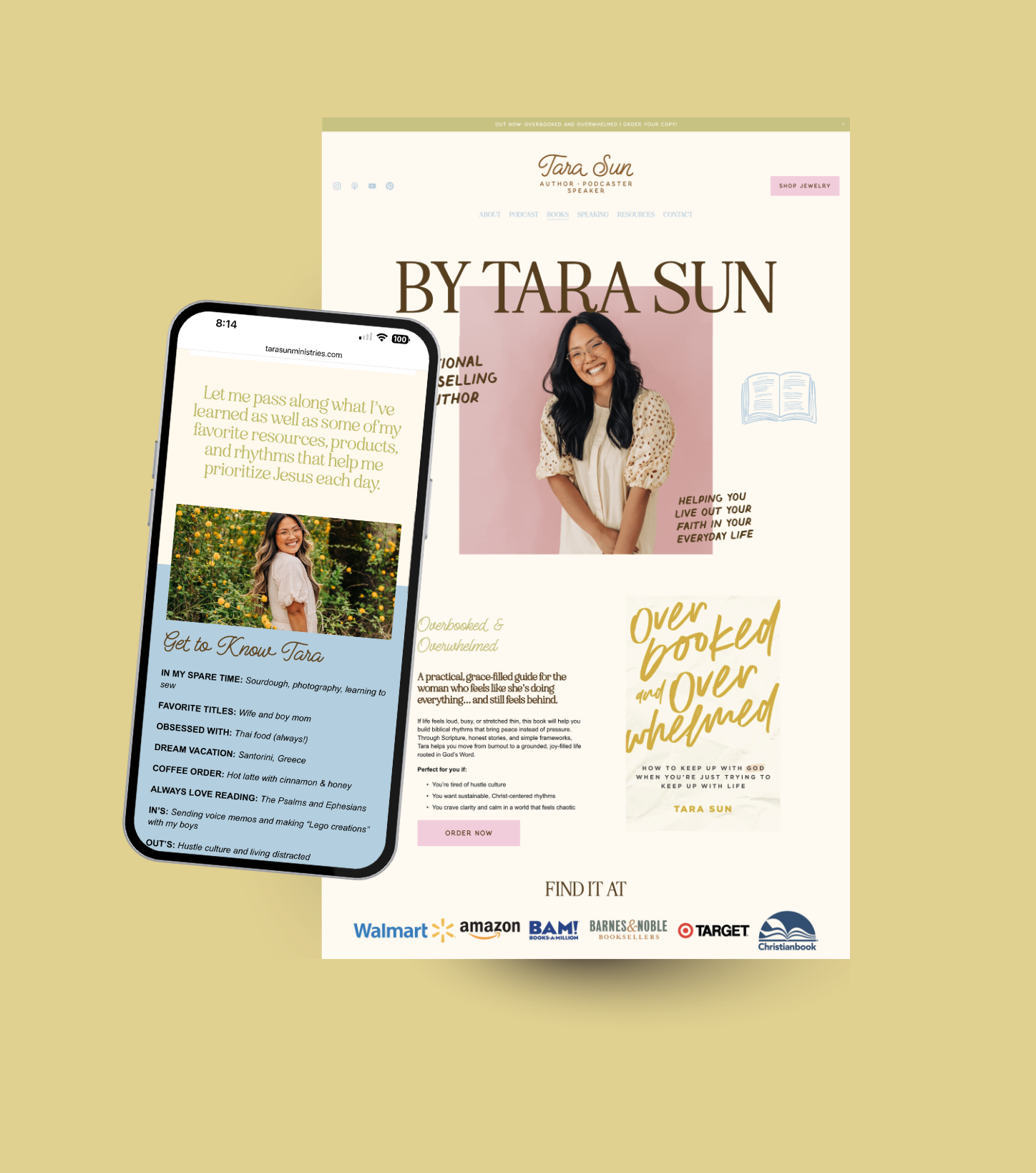
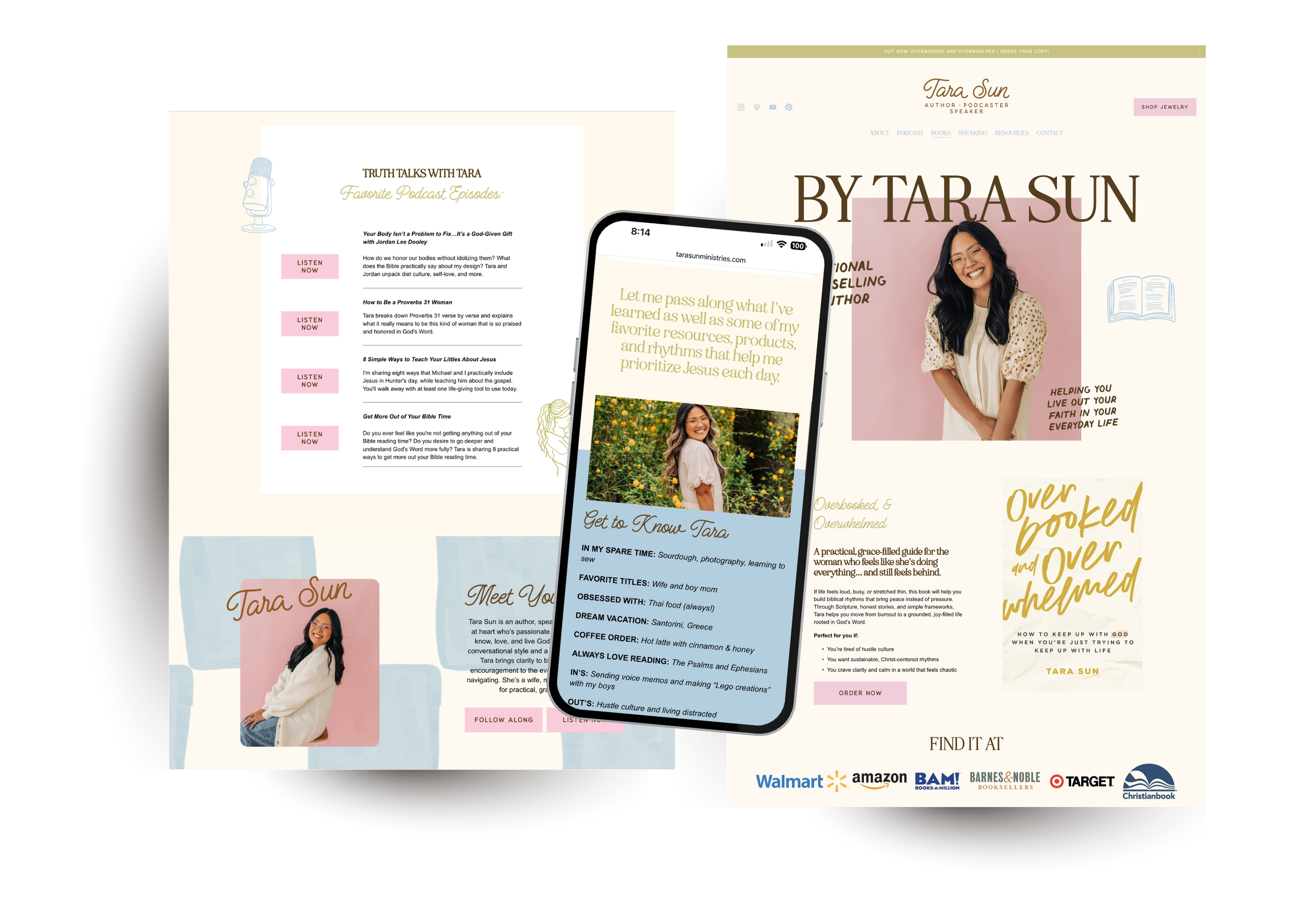
A perfect example of this shift is Tara Sun.
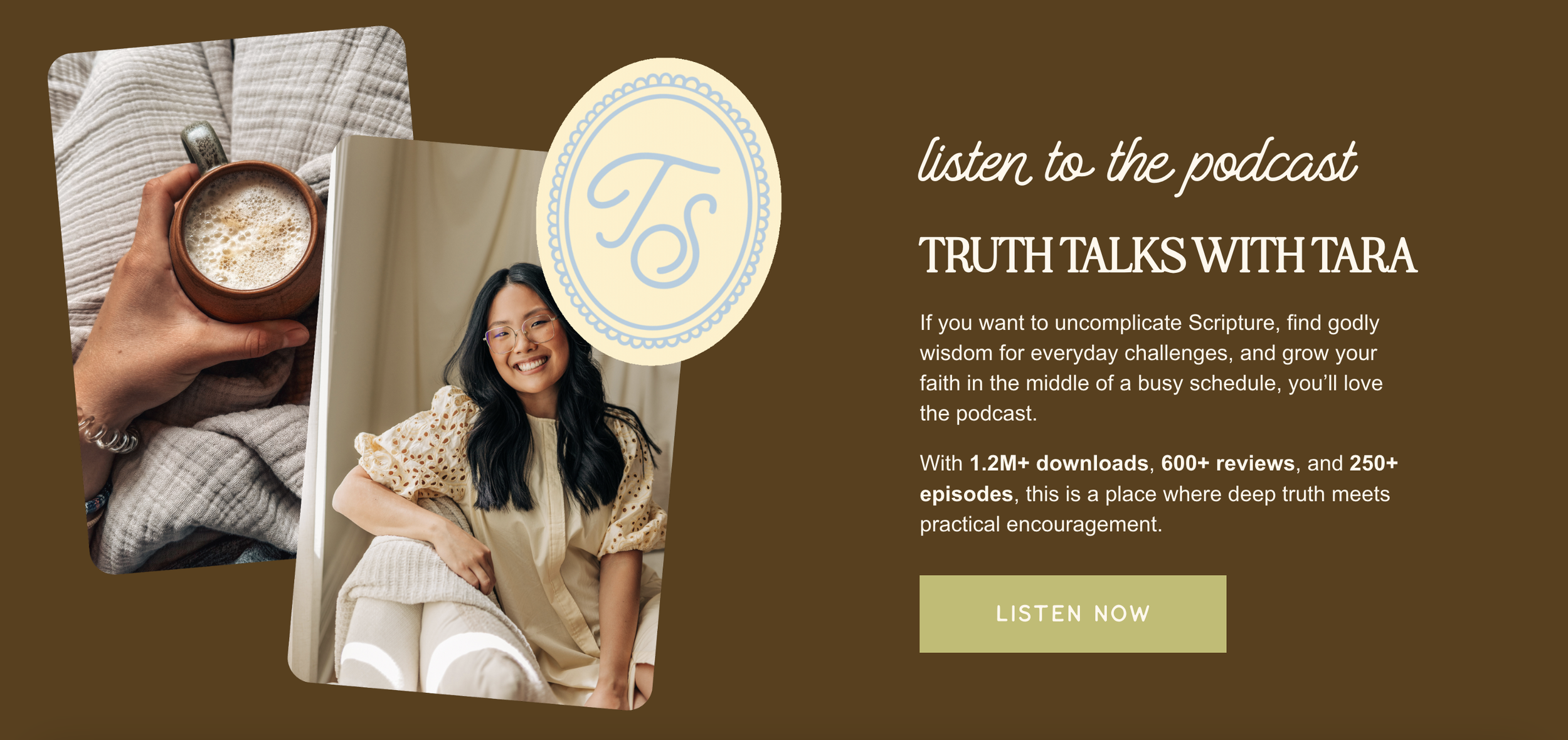
By the time we worked together, Tara had already built an incredible platform — over 130K on Instagram, two best-selling books, and more than 1.2 million podcast downloads. The influence, audience, and authority were all there. But her website hadn’t caught up.
She was still using a basic Squarespace template that didn’t reflect her personality, depth, or credibility. She didn’t have a place online that matched the caliber of what she was building. Marketing herself felt harder than it needed to be because there wasn’t a polished, strategic personal brand website supporting her growth.
When we stepped in to redesign her brand and implement intentional influencer website design, everything changed.
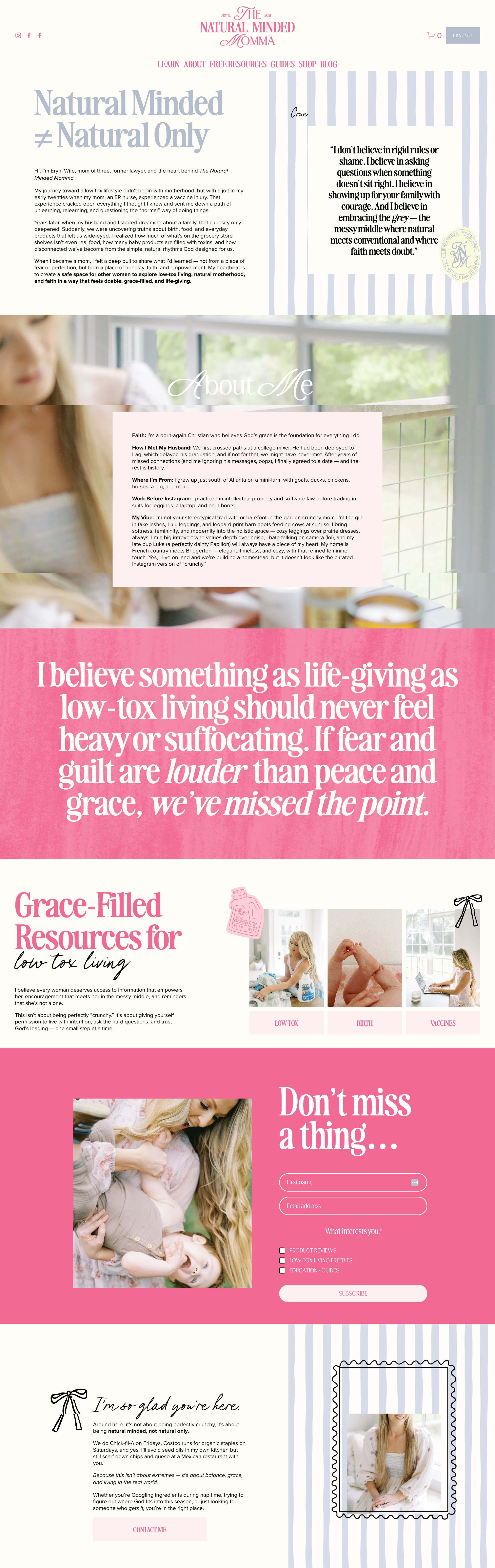
Her homepage clearly positioned her as a faith-driven leader and author. Her books, podcast, and resources were strategically organized. Her brand visuals felt cohesive and elevated. And suddenly, she had a website she felt proud to send publishers, partners, and listeners to.
That’s the difference between “I guess I have a website?” and “This is the home of my brand.”
As creators step into CEO-level brands — launching books, scaling podcasts, building digital products, leading communities — their online presence has to evolve with them. Otherwise, growth starts to feel scattered instead of intentional.
Mistake #2: No Clear Revenue Path
A beautiful website that doesn’t clearly guide people toward your offers is just decoration.
One of the most common influencer website mistakes I see is this: creators have multiple income streams, but none of them are organized in a way that makes sense.
If a visitor lands on your personal brand website and can’t immediately tell how to work with you, buy from you, or book you…you’re leaving clarity (and conversions) on the table.
Why Navigation Structure Matters
Your website navigation should feel like a clear roadmap, not a good ole midwestern junk drawer.
When everything is equally prioritized, nothing stands out. When income streams are buried in dropdown menus or scattered across random pages, people don’t dig — they click away and leave confused.
For example, if speaking is a major revenue stream for you, it shouldn’t be a tiny line in your footer. If your book is central to your authority, it shouldn’t be lost under “Resources.” If your membership is your recurring income engine, it deserves intentional visibility.
Ask Yourself:
If a brand partner landed on my site today, would they instantly understand how to collaborate?
Are my income streams clearly organized — or scattered?
If someone wanted to book me for speaking, would they know exactly where to click?
Is my book or podcast positioned as an authority-builder, or just listed as a link?
Do I have a dedicated sales page for my digital products, or are they hidden inside blog posts?
Is my highest-revenue offer visually prioritized on my homepage?
These questions matter more as your brand expands into CEO-level territory.
Mistake #3: Weak Personal Brand Positioning
You can have a strong Instagram presence and still have weak brand positioning. And that’s a hard truth for creators to hear.
On Instagram, your personal brand often feels clear because people experience you through content. Your tone, your stories, your style of posting, your personality — it all lives in motion. Your audience understands you because they follow you daily.
But when someone lands on your personal brand website, that context disappears. They’re making a fast decision about your credibility without scrolling your reels, stories or perfectly curated feed. That’s where positioning becomes critical.
Instagram Presence vs. Brand Identity
On Instagram, your “brand” might be expressed through:
The way you talk on stories
Your editing style
The topics you consistently post about
Your personality in captions
But professional influencer branding goes deeper than content style.
A cohesive visual identity — typography, color system, photography direction, layout structure — gives your influence structure. It creates consistency beyond the feed. And when that identity is translated through intentional influencer website design, your brand starts to feel established instead of just visible.
Authority Signals That Elevate Your Positioning as a Content Creator or Influencer
When your visual identity and messaging are aligned, your website becomes a credibility tool. Strong personal brand websites include clear authority signals like:
Testimonials from readers, clients, or listeners
Press features or podcast appearances
Brand partnerships displayed with intention
Professional photography that matches your level of growth
Messaging that clearly states what you’re known for
These elements move you from “influencer with a following” to “brand with authority.” This pivotal shift is what creates exponential opportunity, not for your Instagram account, but for your brand. It’s the difference between someone casually consuming your content and someone confidently booking you, publishing you, sponsoring you, or investing in your products.
Visual Identity & Messaging Clarity Matter More Than You Think: A Simple Positioning Check
If a publisher, brand sponsor, or event organizer landed on your site today, what would they see?
Would they instantly understand:
What you stand for?
Who you serve or influence?
What you’re building long-term?
Why you’re distinct in your space?
If your Instagram feels polished but your website feels generic or disconnected from your growth, that’s a serious gap, and strategic Squarespace website design closes it.
Mistake #4: Ignoring Email Capture & Funnel Strategy
Most influencers know they “should” have an email list.
But knowing and building are two very different things.
And while yes, you’ve probably heard that social media is rented land before, this isn’t about scaring you into starting an email list. It’s about leverage. Your personal brand website shouldn’t just display what you’ve created — it should actively support long-term growth through intentional ownership of your audience.
Why Influencers Need Owned Marketing Support (Not Just Social Media Reach)
Instagram is incredible for discovery, but your email list is where depth happens.
Social media builds awareness. Email builds relationship.
When someone joins your list, they’re raising their hand, choosing more access. That shift from follower to subscriber is one of the most important transitions in your entire personal brand strategy.
And here’s the part creators often miss: brands, publishers, and partners care about email lists. A highly engaged list is proof of influence beyond the algorithm.
That’s real marketing support for your business — not just visibility.
Email Strategy as Part of Your Content Marketing Services Ecosystem
Your influencer website design should make joining your list effortless.
That means:
A strong lead magnet clearly visible above the fold on your homepage
Contextual opt-ins embedded throughout blog posts
A dedicated resource or freebie page
Clear calls-to-action guiding visitors to subscribe
A welcome sequence that introduces your story, authority, and offers
And this isn’t just about blasting links through ManyChat. An engaged email list allows you to:
Pre-sell products before launching
Drive traffic to podcast episodes
Launch books with built-in buyers
Pitch brand partnerships with owned audience data
Fill speaking events
Sell digital products without relying on reels to perform
A Quick Funnel Reality Check
Ask yourself:
Do I actually own my audience?
If Instagram paused tomorrow, how would I communicate with my community?
Is my email list growing consistently?
Do I nurture subscribers weekly, or only when I’m launching?
Does my personal brand website clearly guide visitors toward joining my ecosystem?
If there’s no clear answer, there’s likely no clear funnel. And influencer website design without funnel strategy is incomplete.
Lead Magnet Ideas for Influencers (That Actually Make Sense)
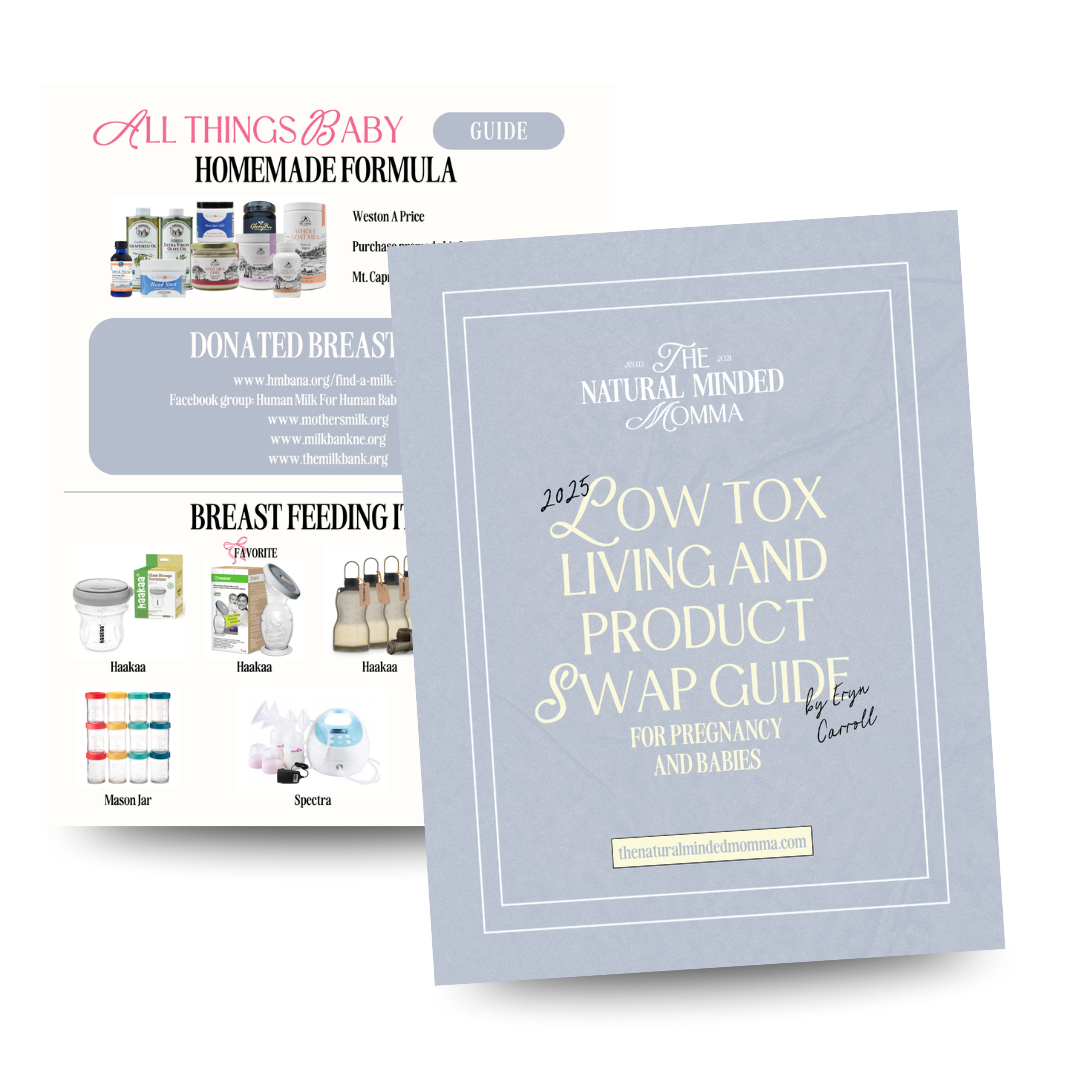
Here are simple, strategic opt-in ideas based on niche:
Lifestyle Influencers
“My Exact Weekly Routine” PDF
Curated Resource Guide
Travel Packing Checklist
Motherhood Creators
Daily Rhythm Template
Toddler Activity Guide
Faith & Encouragement
5-Day Devotional
Scripture Lock Screens
Prayer Journal Pages
Clean Living / Wellness
Pantry Swap Guide
7-Day Meal Plan
Morning Reset Checklist
Style & Fashion
Authors / Podcasters
Bonus Chapter Download
Private Podcast Episode
Discussion Guide for Book Clubs
Notice something? None of these are random. They connect directly to what the creator is known for — reinforcing personal brand positioning while building a subscriber base.
Capsule Wardrobe Guide
Seasonal Outfit Planner
Closet Clean-Out Checklist
Mistake #5: DIY Design That Undermines Credibility
You can have 100K followers, two viral posts a week, and brand deals lined up… and still lose credibility the moment someone clicks your website. Why? Because design communicates before your copy ever does.
And when your personal brand website looks like a “girl boss era” template from 2018 — mismatched fonts, generic stock photos, cluttered layout, inconsistent colors — people click away. Not because you aren’t credible, but because the presentation doesn’t match the level you’re operating at. Perception matters more than most creators want to admit.
Brand Identity Design Is More Than a Logo
A polished brand identity design system signals maturity. It tells visitors:
This brand is established.
This creator is intentional.
This business is here for the long term.
When your visual identity is cohesive (typography, color palette, photography direction, layout consistency) your website stops feeling like a side project and starts feeling like a legitimate brand asset.
Let’s contrast that with a DIY template that hasn’t evolved as you’ve grown. It may have worked when you were building momentum. But as you scale, design either reinforces authority… or quietly weakens it.
And the higher you climb, the more that gap becomes noticeable.
What A Professional Squarespace Website Designer Does Differently
There’s a massive difference between customizing a template and investing in strategic design.
Professional Squarespace website designers don’t just “make it pretty.” They:
Structure your homepage for conversion
Align your visuals with your positioning
Build hierarchy into your navigation
Create consistency across all marketing collateral
Ensure your website supports your long-term brand launch strategy
When influencer website design is approached strategically, your site becomes:
Easier to navigate
Easier to trust
Easier to convert
All of this directly impacts partnerships, launches, and growth.
Design Psychology & Authority Perception
Here’s the hard question: If a major sponsor, publisher, or event organizer clicked your site today, would it feel aligned with your following?
Or would it feel like your Instagram grew up… but your website didn’t?
We make credibility judgments in seconds.Cluttered design, outdated templates, or inconsistent branding can unintentionally communicate:
Hobbyist energy
Inexperience
Lack of polish
Even if none of those things are true. That’s the power of perception psychology. And that’s why investing in professional influencer website design isn’t vanity. It’s strategy.
A Scaling Reality Check
As you grow, your investments should evolve with you.
You upgrade:
Your camera equipment
Your team
Your systems
Your marketing support
Your brand presence should scale too.
Ask yourself:
Does my website reflect my current level of growth?
Does my design communicate authority without me having to say it?
Am I relying on aesthetics I chose years ago?
Is my personal brand website positioned for where I’m going next?
Because the truth is, as you step into CEO-level visibility, design stops being optional and becomes foundational.
And when your influencer website design matches your growth, everything else feels easier — pitching, launching, scaling, expanding.
Building a Website That Matches Your Growth
If you’ve built real influence, your website can’t be an afterthought anymore.
We’ve walked through five common influencer website mistakes: treating your site like a link hub, lacking a clear revenue path, weak positioning, ignoring email strategy, and relying on DIY design that no longer reflects your level. None of these are catastrophic on their own — but together, they quietly limit what your brand could become.
Influencer website design isn’t just about looking polished. It’s about creating structure around your growth. It’s about turning followers into subscribers, visibility into authority, and content into long-term equity.
So here’s your next step: audit your site.
Does it reflect where you are now — or where you started?
Does it clearly communicate what you’re building next?
Would a sponsor, publisher, or partner feel confident landing there?
If you’re ready for a personal brand website that supports your next level, I’d love to help. You can inquire about strategy consultation or professional website design below, and we’ll build something that finally matches your growth.
WHAT TO READ NEXT
6 Signs Your Website Doesn’t Reflect Your Brand Identity Anymore
4 Ways You Can Use Email Marketing to Grow Your Businesses
Custom Brand Design + Squarespace Website Design for Photographer and Female Service Provider



Simply Sophie Designs helps female-led small businesses go from a stressful “do-it-all” marketing approach to having a memorable brand, strategic website, and results-driven launch support that boosts their growth beyond what they once thought was possible.